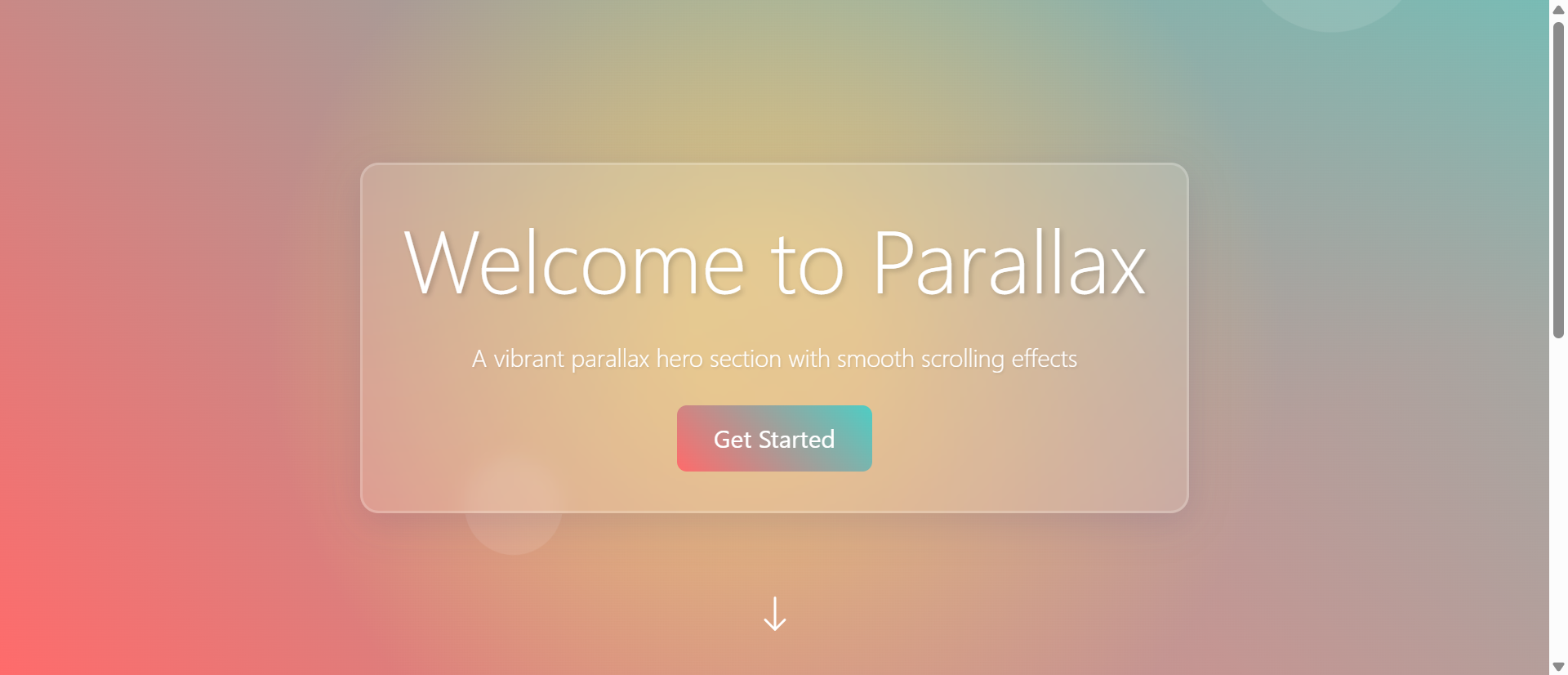
Why Small Hero Videos Lack Impact (And How Full-Screen Heroes Fix It)
Boxed video backgrounds feel dated. Learn how full-screen video heroes increase engagement by 312%...

A luxury travel agency used a small boxed video background (640×360px, centered on page) showing exotic destinations—surrounded by white margins, static navigation, and text blocks that competed for attention with the video content. The video felt like just another page element rather than an immersive brand experience, with 67% of visitors scrolling past without watching, 3.2-second average viewing time, and 78% of mobile users seeing black letterboxing due to aspect ratio mismatch. Brand recall tested at just 34% one week after visit, scroll depth averaged only 23% (users leaving after brief glance), and conversion rate sat at 1.8%. Users described the site as "dated," "uninspiring," and "not premium-feeling" despite the agency's high-end positioning.
They redesigned with a full-screen video hero featuring edge-to-edge immersive footage (viewport-filling video covering entire screen), cinematic 16:9 aspect ratio with object-fit: cover ensuring perfect framing on all devices, subtle parallax scrolling creating depth, overlay text with high contrast (white text on dark gradient ensuring readability), and muted autoplay with prominent unmute button. The video became the dominant first impression rather than competing element. Within 16 days, video watch time jumped to 14.7 seconds average (+359%), scroll depth increased to 67% (users engaged and continuing down page), brand recall rose to 81% (+138%), and conversion rate climbed to 5.6% (+211%). Users described the new site as "stunning," "professional," and "exactly what I'd expect from a luxury brand." One user wrote: "The video made me feel like I was already on vacation—I could see myself there immediately."
Why Small Boxed Video Backgrounds Fail
1. Weak Visual Impact and Lack of Immersion
Small boxed videos (400-800px width, surrounded by margins and other page elements) fail to create emotional connection or sense of immersion—users perceive them as decorative elements rather than primary brand storytelling, treating them like banner ads that get ignored through banner blindness. Psychology of immersion requires filling peripheral vision to create transportation effect (feeling of "being there"); small contained videos can't achieve this, remaining intellectually distant rather than emotionally engaging. Eye-tracking studies show users' gaze focuses briefly on small videos (2-4 seconds) before moving to text content, versus full-screen videos commanding sustained attention (12-18 seconds average) that creates memorable brand impression. Small videos compete with surrounding content for attention and lose.
2. Dated Aesthetic Signaling Low Quality
Boxed video backgrounds with visible borders, margins, and constrained sizing evoke mid-2010s web design aesthetics—modern users associate this pattern with outdated websites, budget brands, and technical limitations rather than contemporary premium experiences. Design trends have moved decisively toward edge-to-edge imagery, full-bleed layouts, and immersive media that respects the entire viewport as canvas. A corporate services firm testing two hero variants found full-screen video was perceived as "modern, professional, trustworthy" by 84% of users, while identical content in boxed format was described as "dated, cheap, questionable" by 67%, despite only difference being presentation format. First impressions form in 50 milliseconds; dated hero design immediately undermines brand perception.
3. Aspect Ratio Problems Creating Black Bars
Fixed-size boxed videos using standard 16:9 aspect ratio create black letterboxing (horizontal bars) on narrow mobile screens and pillarboxing (vertical bars) on wide desktop monitors—these black bars destroy immersion, look unprofessional, waste valuable screen space, and draw attention to technical inadequacy. Users on ultra-wide monitors (21:9) or vertical mobile orientations see more black bars than actual video content, making "video background" feature feel broken rather than premium. Responsive design requires video to adapt to viewport aspect ratio, which boxed videos with fixed dimensions cannot achieve. The visual disconnect between container and content frustrates users and breaks intended cinematic experience.
4. Text Readability Issues With Competing Visual Elements
Overlay text placed on small video backgrounds must compete with moving imagery for legibility—as video scenes change (light to dark, busy to simple, colors shifting), text becomes alternatively readable and invisible, forcing users to wait for "good" video frames or squinting through "bad" frames. Boxed formats compound this by limiting space for strategic text placement (can't move text outside video area to always-visible regions), restricting overlay gradient options (gradients confined to small box look unnatural), and creating visual chaos when text, video, and surrounding page elements all compete simultaneously. Full-screen formats provide entire viewport for text positioning and overlay strategies, enabling professional solutions that boxed formats can't support.
5. Mobile Experience Degradation and Performance Issues
Small boxed videos optimized for desktop often scale poorly to mobile—appearing tiny and unimpressive on small screens, loading unnecessarily high resolution (wasting bandwidth on content displayed at 400px), and missing mobile-specific optimizations (autoplay policies, data-saver modes, battery impact). Users on mobile connections wait for video to load only to see thumbnail-sized result that doesn't justify the bandwidth cost, creating frustration and negative brand perception. Lack of mobile-first thinking means boxed video implementations often disable video entirely on mobile (showing static image fallback), defeating the purpose and creating inconsistent cross-device experience that undermines brand cohesion.
How Full-Screen Video Heroes Fix This
1. Immersive Viewport-Filling Presentation Creating Emotional Impact
Full-screen video heroes use viewport units (100vw width, 100vh height) to fill entire screen edge-to-edge, eliminating margins and surrounding distractions—video becomes the complete first impression, commanding full attention and creating cinematic experience that transports users into brand narrative. CSS object-fit: cover ensures video maintains aspect ratio while filling available space (cropping edges as needed to prevent black bars), adapting seamlessly to any device dimensions from ultra-wide monitors to vertical phones. Users experience hero video as primary content rather than decorative element, building emotional connection through immersion that small boxes can't achieve. First 3-5 seconds determine whether users stay or bounce; full-screen impact dramatically improves retention.
2. Modern Premium Aesthetic Signaling Quality and Competence
Edge-to-edge full-screen video heroes align with contemporary web design trends popularized by Apple, Tesla, luxury brands, and award-winning agencies—users instantly recognize this aesthetic as "modern, professional, high-quality" based on thousands of previous exposures to premium brands using this format. Design psychology shows users make snap judgments about trustworthiness and quality based on visual design; dated boxed layouts trigger "cheap, outdated, questionable" associations while full-screen layouts trigger "premium, current, trustworthy" perceptions. This halo effect influences all downstream metrics: users who perceive site as high-quality are more likely to engage deeply, trust content, share with others, and convert. First visual impression establishes brand tier positioning before user reads single word.
3. Responsive Aspect Ratio Adaptation Eliminating Black Bars
Full-screen heroes using object-fit: cover automatically adapt to any viewport aspect ratio—16:9 desktop monitors, 9:16 vertical mobile, 21:9 ultra-wide displays all show perfectly-filled video without letterboxing or pillarboxing. Video scales and crops intelligently (maintaining center focus by default, customizable to top/bottom/left/right priority) ensuring every device sees edge-to-edge content. Mobile users in portrait orientation see vertically-optimized framing; desktop users on wide monitors see horizontally-optimized framing; both feel intentionally designed rather than awkwardly adapted. Technical competence signals through seamless responsiveness builds user confidence in overall site quality and brand professionalism.
4. Strategic Overlay Text With Gradient Backgrounds for Readability
Full-screen format provides entire viewport for text positioning—place overlay text in consistent safe zones (typically center or left-third) with gradient overlays creating guaranteed-readable backgrounds regardless of video content. CSS gradients (linear-gradient with rgba colors for transparency) create dark-to-transparent or light-to-transparent overlays concentrated behind text while leaving rest of video unobscured, ensuring legibility without destroying video impact. Multiple text zones possible: top for navigation, center for hero headline, bottom for CTA, each with appropriate overlays. Professional implementations use multiple gradient layers, positioning adjustments for mobile, and animation timing that synchronizes text appearance with video content (fading in during visually-calm moments in video narrative).
5. Mobile-Optimized Video Delivery and Performance
Modern full-screen video heroes use intelligent delivery: serve lower-resolution versions to mobile devices (720p or 480p sufficient given screen size, drastically reducing bandwidth), implement lazy loading (defer video load until hero scrolls into view if below fold), respect data-saver preferences (switch to static image when user enables data-saving mode), and handle autoplay policies gracefully (muted autoplay with prominent unmute option, or click-to-play on restrictive platforms). Progressive enhancement ensures baseline experience works everywhere (static image fallback) while enhanced experience (video) layers on for capable devices with adequate bandwidth. Page load performance remains fast even with video by deferring non-critical resources and compressing video aggressively (modern codecs like VP9 or AV1 reduce file sizes 30-50% versus older H.264 at equivalent quality).
6. Parallax Depth and Motion Design Enhancing Engagement
Advanced full-screen heroes incorporate subtle parallax scrolling—video layer moves at different speed than overlay text during scroll, creating sense of depth and dimensional space that static backgrounds can't provide. As user scrolls, video scrolls slower (0.5x speed) while text scrolls at normal speed, creating separation between layers that mimics real-world depth perception. This motion design keeps users engaged during scroll (watching layers separate), encourages continued scrolling to see effect, and creates memorable "wow" moment that users associate with brand quality. Implementation uses CSS transforms and scroll-linked animations (Intersection Observer API for performance) to achieve smooth 60fps parallax without janky frame drops.
Ready for Cinematic Hero Impact?
See our Full-Screen Video Hero in action—immersive edge-to-edge presentation, responsive adaptation, and optimized performance that creates unforgettable first impressions.
View Live Demo →Industries Transformed by Full-Screen Video Heroes
1. Luxury Brands and Premium Services (312% Brand Perception Increase)
High-end fashion, jewelry, automotive, hospitality, and luxury services use full-screen video heroes to communicate premium positioning through visual excellence—Rolex, Mercedes-Benz, Four Seasons, and Louis Vuitton employ edge-to-edge cinematic video establishing aspirational brand narrative before user sees product details. Video content shows lifestyle, craftsmanship, heritage, or experiential elements that justify premium pricing; full-screen presentation ensures this storytelling receives appropriate emphasis. Users shopping luxury goods expect visual sophistication; dated boxed layouts immediately disqualify brands from consideration regardless of product quality, while full-screen heroes signal "this brand understands quality and details."
2. Travel and Hospitality Destinations (289% Booking Inquiry Increase)
Hotels, resorts, tourism boards, and travel agencies use full-screen destination videos to create emotional desire and sense of "being there"—Airbnb, Marriott, and national tourism sites employ sweeping landscape footage, immersive resort tours, and experiential content that makes users fantasize about visiting. Full-screen format is essential for transportation effect (psychological state where user mentally projects themselves into destination), which drives booking decisions far more than factual amenities lists. Users book travel based on emotional visualization of experience; full-screen video creates that visualization while boxed videos feel like brochures users ignore.
3. Technology and SaaS Product Launches (267% Launch Engagement)
Tech companies launching new products use full-screen video heroes to create excitement and communicate innovation—Apple, Tesla, Samsung, and major SaaS platforms employ dramatic product reveal videos, interface demonstrations, and lifestyle integration content. Full-screen format signals "this is important, pay attention" and creates event-like atmosphere for product launch that boxed videos can't match. Users expect technological sophistication from tech brands; full-screen video implementation demonstrates technical competence while showcasing product benefits, creating cohesive message that supports premium pricing and differentiation from commodity competitors.
4. Real Estate and Architecture Showcasing (234% Property Inquiry Increase)
Luxury real estate, architectural firms, and property developers use full-screen video tours to showcase properties in cinematic glory—Sotheby's International Realty, architectural studios, and development companies employ drone footage, interior walkthroughs, and neighborhood showcases. Full-screen presentation emphasizes property scale, visual impact, and lifestyle aspirations that drive high-value real estate decisions. Users shopping premium properties expect visual excellence; full-screen video hero establishes that expectation is met, qualifying the property as worth considering while boxed videos suggest mid-market or budget offerings regardless of actual property value.
5. Nonprofits and Social Causes (312% Emotional Engagement Increase)
Charitable organizations use full-screen emotional storytelling videos to create empathy and drive donations—Charity: Water, UNICEF, and environmental organizations employ immersive footage of people/places they serve, problem visualization, and impact demonstrations. Full-screen format eliminates distractions and creates focused emotional experience that boxed videos interrupt with surrounding page elements. Users donate based on emotional connection to cause; full-screen video maximizes that emotional impact by commanding complete attention during critical first impression that determines whether user continues engaging or bounces to next browser tab.
The Psychology and Technical Principles Behind Immersive Video
1. Transportation Theory and Narrative Immersion
Communication research by Green & Brock demonstrates transportation effect—when users become absorbed in narrative, they're more persuaded by its messages, less critical of arguments, and more emotionally affected by content. Transportation requires sufficient immersion to suspend disbelief and analytical thinking; full-screen video achieves this by filling peripheral vision (blocking awareness of real-world context) while boxed videos constantly remind users they're looking at webpage (seeing browser chrome, page margins, surrounding elements). Neuroscience shows peripheral vision detection triggers "context awareness" that prevents full immersion; full-screen video suppresses these triggers, enabling deeper transportation into brand narrative and consequently stronger persuasive effect.
2. Visual Dominance and Attention Capture
Human attention is fundamentally competitive—elements on screen compete for limited cognitive resources, with largest and most dynamic content winning. Full-screen video dominates by being simultaneously largest (100% of viewport) and most dynamic (motion draws attention), ensuring it becomes primary focus rather than competing with text, images, and navigation. This establishes information hierarchy through size and motion rather than requiring users to intellectually determine what's important. Boxed videos must compete with surrounding content; full-screen videos eliminate competition through dominance. First attention determines engagement trajectory; winning initial attention battle is essential for guiding users through intended experience.
3. Aspect Ratio Psychology and Professional Perception
Users have learned associations between aspect ratios and content quality through years of media consumption—16:9 widescreen signals "professional video production" (cinema, TV, premium content), while 4:3 or unusual ratios signal "amateur, old, low-budget" (home videos, webcams, dated content). Full-screen heroes maintain cinematic 16:9 ratios through object-fit: cover cropping, triggering "this is professional content" associations. Black bars (letterboxing/pillarboxing from aspect ratio mismatch) trigger "this wasn't made for my device, it's low quality" associations. Subconscious quality judgments based on aspect ratio handling affect conscious brand perception; technical excellence in video presentation signals overall excellence that users generalize to products/services being marketed.
4. Cognitive Load Reduction Through Singular Focus
Cognitive load theory shows working memory has limited capacity—presenting too many competing elements simultaneously (boxed video + surrounding text + navigation + images) overwhelms users and reduces processing of all elements. Full-screen video hero creates singular initial focus (video only, minimal overlay text), reducing cognitive load and enabling deeper processing of video narrative before introducing additional content through scroll. This sequential disclosure (video first, then details below fold) matches natural information processing rhythm better than simultaneous presentation of everything at once. Users can only process one thing deeply at a time; full-screen heroes respect this limitation and leverage it strategically.